
Synthavo
AI platform for industrial spare-parts identification and ordering
Synthavo, Stuttgart, Germany.
Request
Result
Technologies
- React
- TypeScript
- Vite
- Material UI
- Vitest
- React Testing Library
- TUS protocol
- PapaParse
Result
Results
-
A reworked customer-facing product
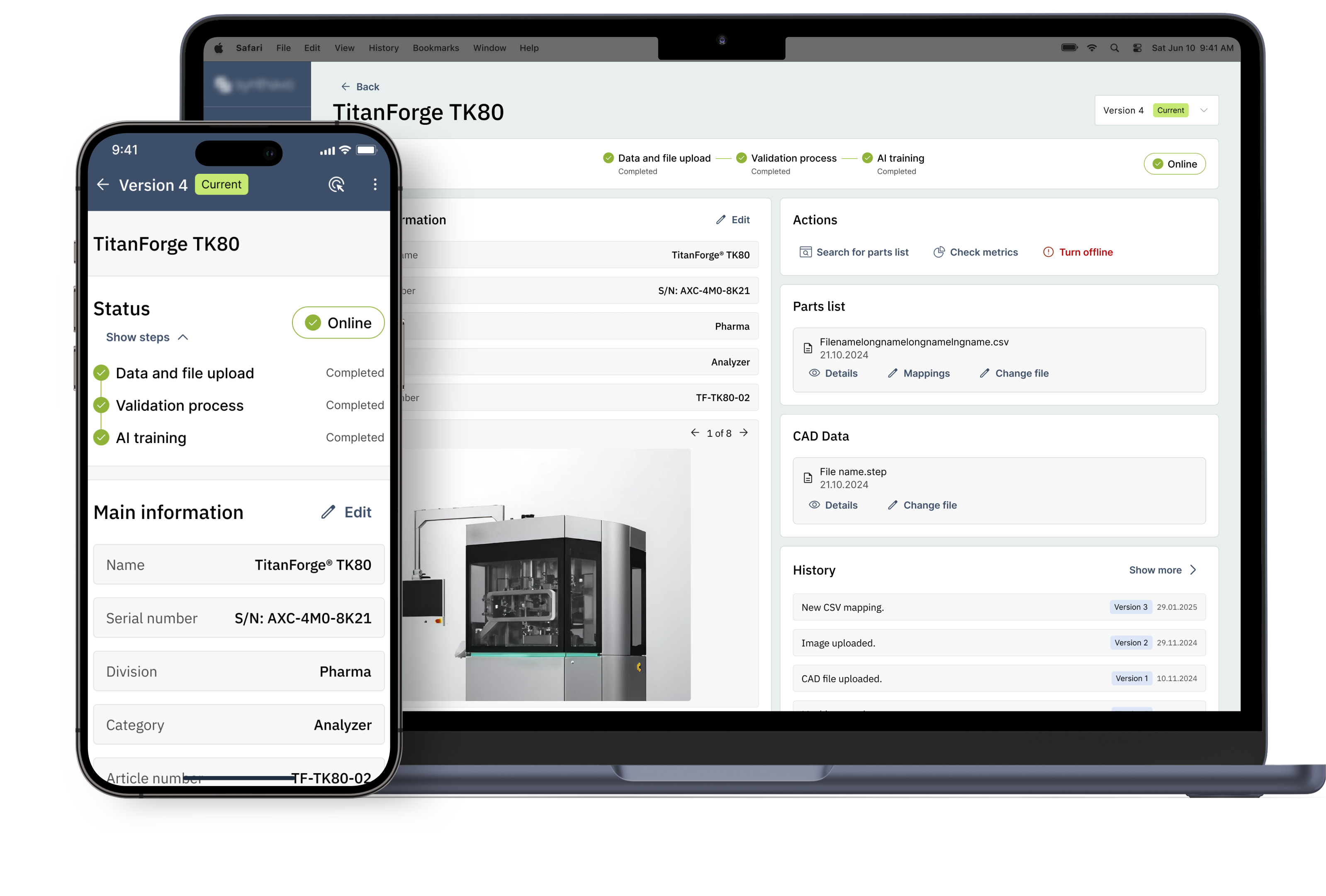
The customer-facing side of the platform was rebuilt as a modern TypeScript and React frontend on top of the client's AI engine and backend, with the points of friction in the existing product resolved.
-
A locked-in post-MVP vision
Synthavo came out of the discovery phase with a structured post-MVP backlog, defined user roles, and end-to-end flows for both the web and mobile versions of the product — a clear plan to build against.
Challenge
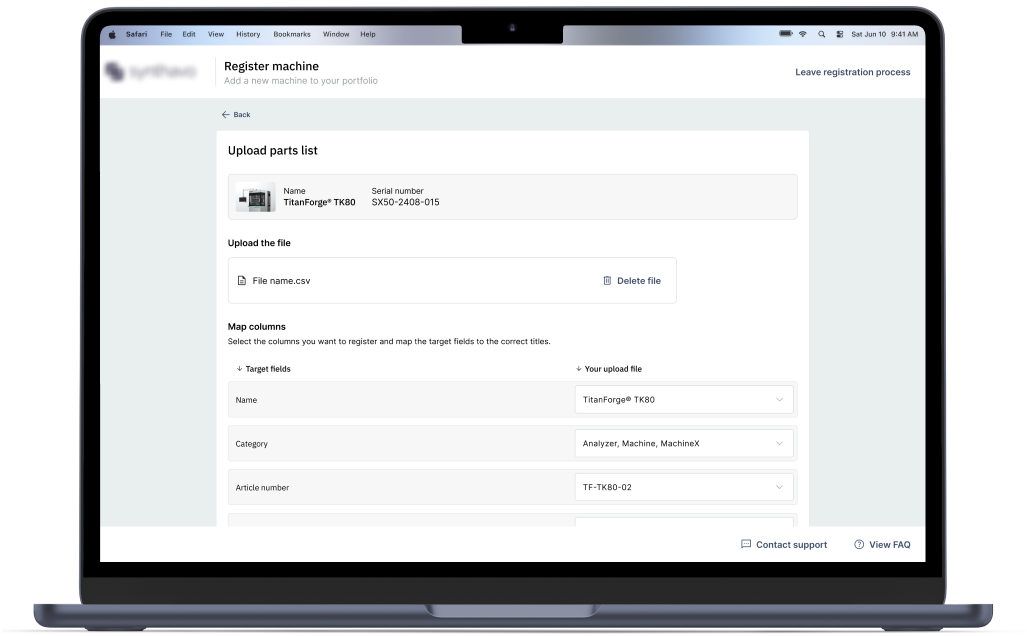
Synthavo is an AI company in the industrial after-sales space, building a SaaS platform that lets machinery manufacturers and their customers identify and order spare parts from a single photo. The client had a working AI engine and an in-house backend team, but the customer-facing web product was lagging — flows built incrementally were confusing users, machine registration uploads ran for up to a day with no progress feedback, and version management left users unsure which configuration they were viewing.
The client engaged Cogniteq to address two gaps: the customer-facing product itself, and the strategic question of what to build next.
Solution
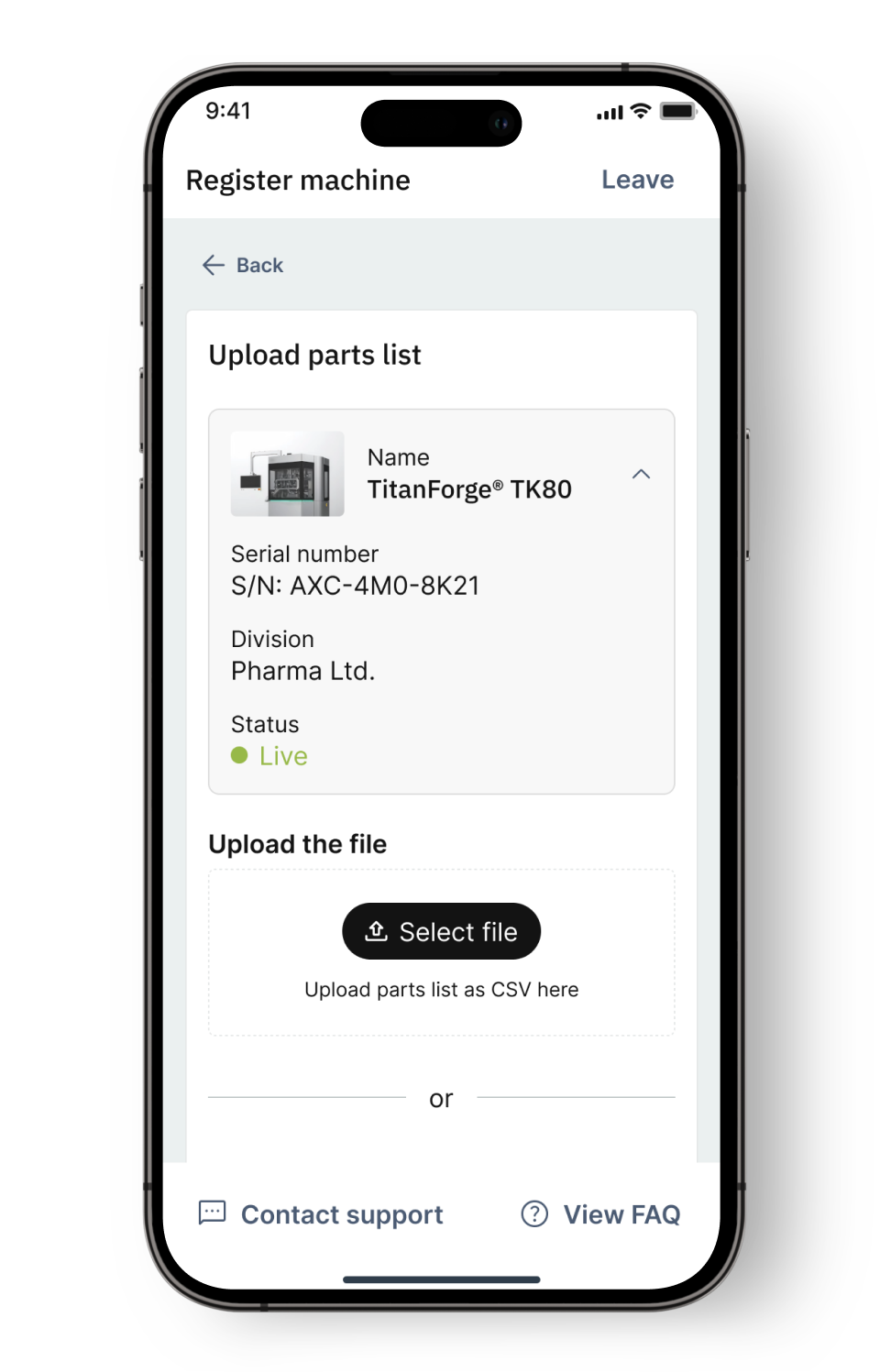
The Cogniteq team led the UX redesign of the core user flows and rebuilt the frontend in TypeScript and React with full automated test coverage, working on top of the client's existing AI engine and backend. The redesign was driven by real customer feedback from Synthavo's user base, covering machine onboarding, parts catalogue management, and version management. To keep frontend work independent of the client's backend timeline, the team built a contract-first API mock and specification.
In a later phase, Cogniteq's business analyst worked with the client's CTO to define the platform's next stage, producing a decomposed post-MVP backlog with the user roles, models, and end-to-end use cases needed to plan against it — across both the web and mobile versions of the product.

UX redesign of core flows
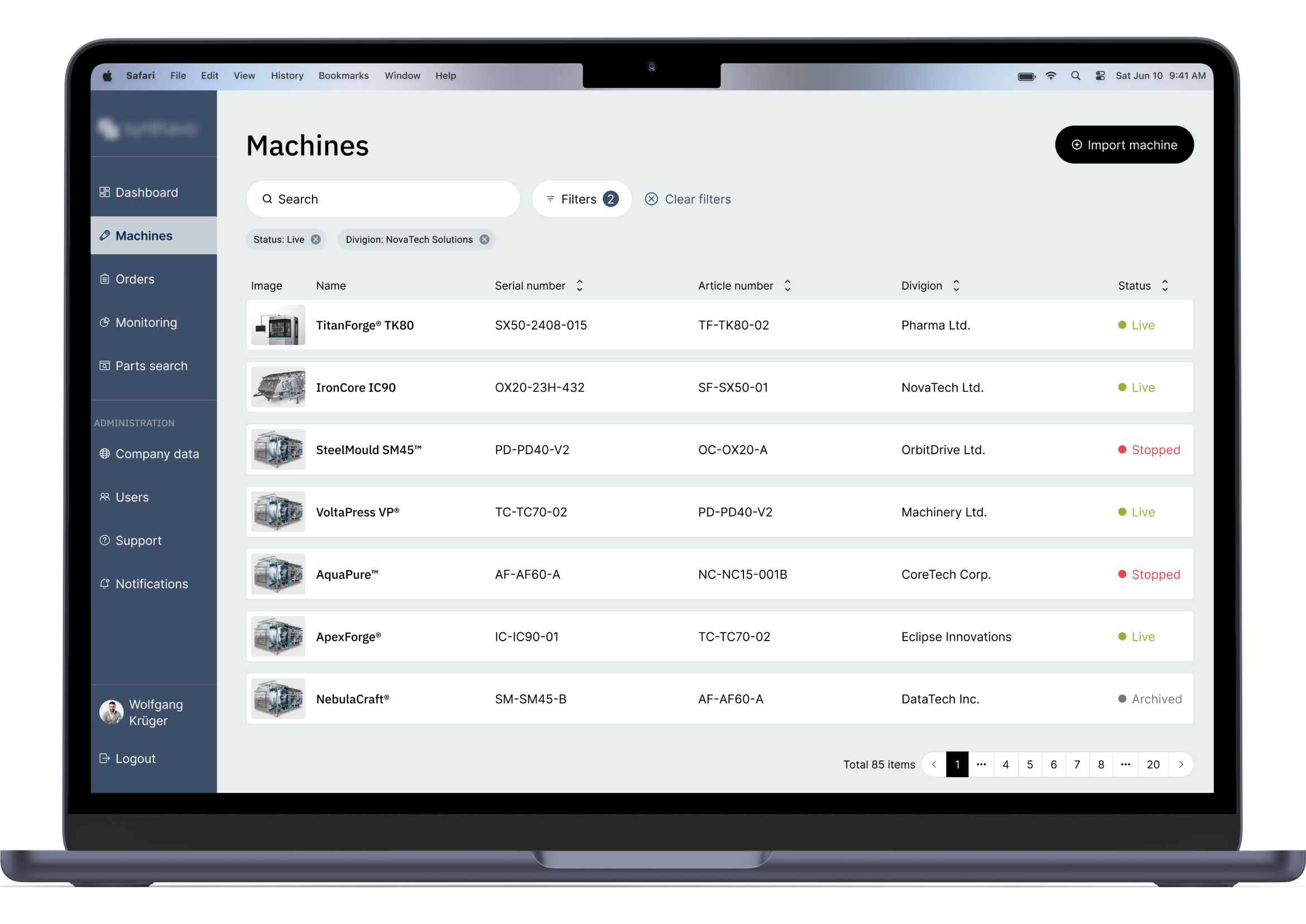
Reworked machine onboarding, parts catalogue management, and version tracking, based on real customer feedback.

Long-running data uploads
Clear progress feedback for the day-long machine-registration uploads, with resumable transfers via the TUS protocol.

Configuration version tracking
Status indicators that always show whether a machine configuration is current, previous, or a draft.

Frontend with full test coverage
A TypeScript and React frontend rebuilt from the ground up, with full automated test coverage treated as a first-class deliverable.

Contract-first API design
A mock API and formal specification that kept frontend delivery independent of the backend roadmap.

Post-MVP discovery
A decomposed product backlog with user roles, models, and end-to-end use cases for the web and mobile versions.
Drop us a line!
Do you have a product idea you wish to bring to life?