In 2026, standard fitness plans offered by apps seem boring and inefficient. Personalization and flexibility of fitness experiences have become a standard that users expect to get. And that’s exactly what AI can bring to the fitness industry.
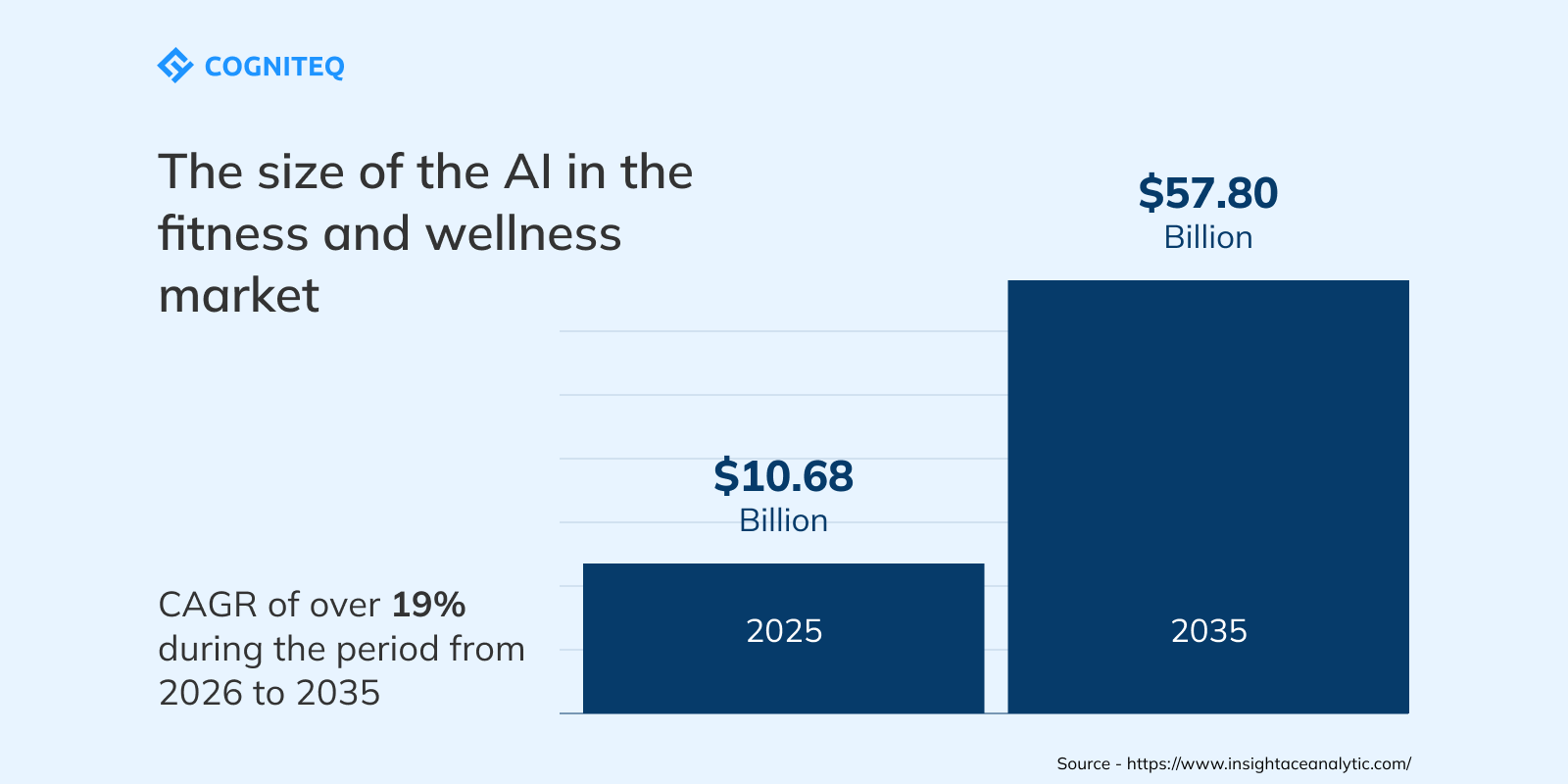
The size of the AI in fitness and wellness market was $10.68 billion in 2025. It is predicted to hit the mark of $57.80 billion by 2035, with a CAGR of over 19% during the period from 2026 to 2035. What is behind this active market growth? And why is the demand for AI in fitness app development continuously increasing? We will answer these questions in this blog post and explain how you can use AI-driven analytics to enhance user experiences.
Role of Artificial Intelligence in fitness
The primary goal behind the use of AI in fitness today is to democratize elite-level personal training and make bespoke health guidance accessible to anyone who has a smartphone. AI can process complex biological and behavioral data. This turns it into a 24/7 wellness partner that understands a user’s unique physiology and schedule.
The integration of AI has changed the value proposition of fitness apps. In traditional apps, users needed to input all data manually. AI-driven platforms proactively offer solutions. They provide real-time feedback and dynamic adjustments that previously required a human coach.
Here are the key functions of Artificial Intelligence in fitness.
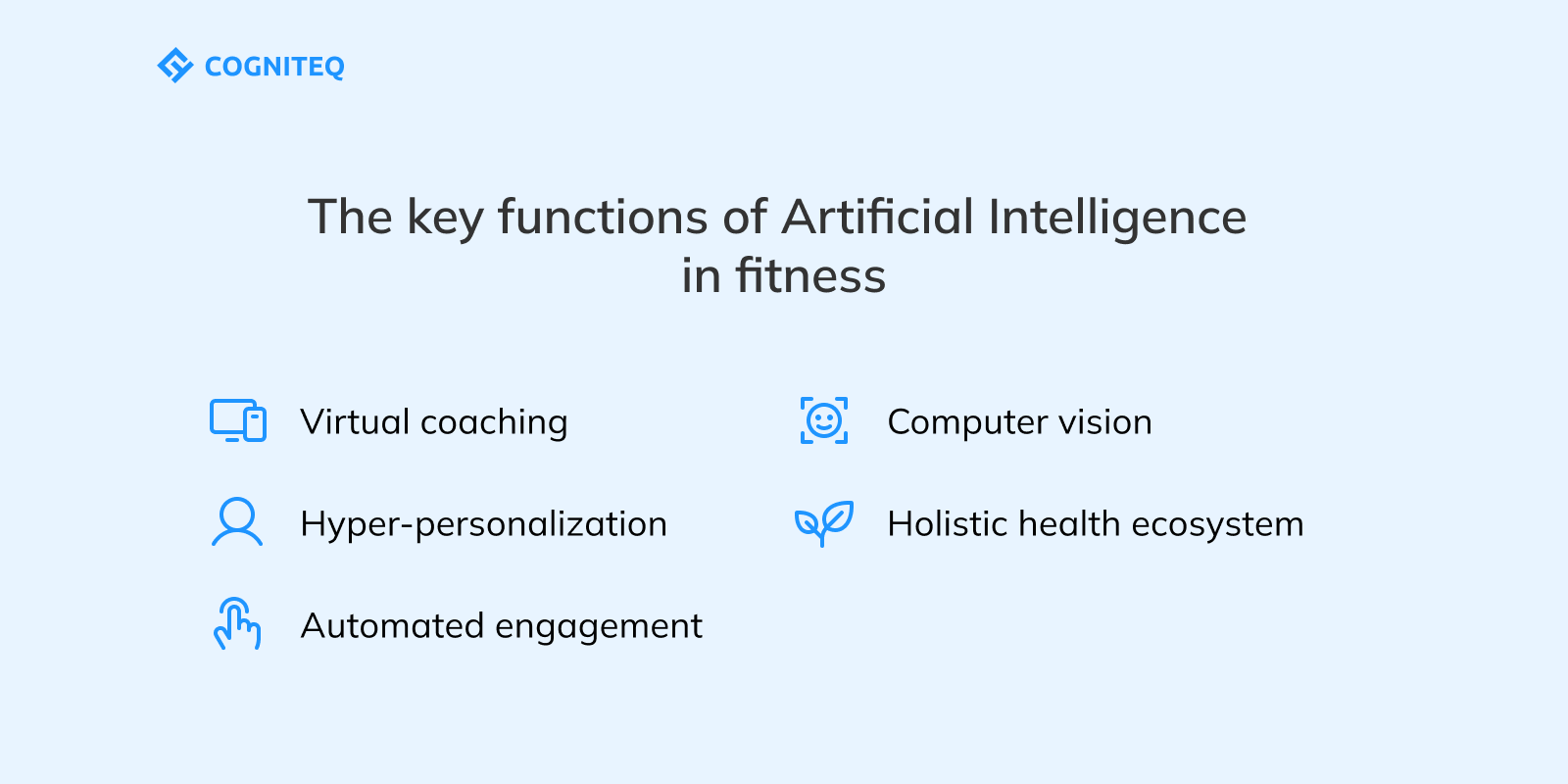
- Virtual coaching. AI-powered apps deliver real-time instructions and motivation based on the preferences and needs of each user.
- Hyper-personalization. AI can tailor every workout and meal to the individual’s current state. Modern apps use machine learning to analyze a user’s past performance and recovery data for every specific day.
- Automated engagement. Predictive models help detect and send notifications when a user is likely to quit.
- Computer vision. Equipped with a computer vision functionality, a fitness app can turn a phone’s camera into a form-correction tool to ensure the safety and efficiency of workouts.
- Holistic health ecosystem. AI in health and fitness helps eliminate data silos between these two spheres. Modern platforms are beginning to correlate physical stress with mental fatigue. They can suggest breathwork or meditation when physiological stress markers spike. Meanwhile, AI chatbots can generate meal plans that adapt to the calories burned in users’ workouts.
Benefits of AI integration in fitness apps
To better demonstrate the value of using artificial intelligence in fitness, it makes sense to consider it from different perspectives.
Major perks of AI in the fitness industry for users
Some years ago, users who wanted to structure their workouts and introduce health habits in their lives had a dilemma: to rely on a generic PDF plan or to hire a $100/hour human coach. Neither option looks very appealing. But AI can offer a good alternative.
- Tailored plans. AI apps function dynamically. If a user’s pace slows down, the AI instantly adjusts the next workout to match their current capability. This ensures faster results, as users always train at their optimal intensity.
- Safety and injury prevention. Beginners often quit because they are afraid of doing exercises wrong. AI-driven computer vision uses the phone’s camera to track key body points in real time. As a result, users receive instant feedback and can drastically reduce injury risk.
- 24/7 accountability. Unlike human coaches, AI doesn’t have its own personal life and doesn’t have to sleep. Apps can perform their role of visual assistants 24/7.
Key advantages of AI integration in fitness app for businesses
According to industry statistics, 50% of new gym members quit within the first 6 months (and never renew their memberships). For app developers and gym owners, AI is the key to keeping their clients.
- Predictive retention. AI is good at spotting patterns that a human can miss. By analyzing login frequency and intensity drops, AI can flag a user who is at high risk of canceling before they actually do. Automated, hyper-targeted notifications and incentives can keep users in the ecosystem longer.
- Scalability without staff burnout. The number of clients that a trainer can manage effectively is limited. For AI, such limits don’t exist. It can analyze huge volumes of data and provide trainers with insights into clients’ performance and states. As a result, a single trainer can support 3x to 5x more clients without sacrificing the quality of the personal experience.
- Data-driven revenue streams. Artificial intelligence in fitness turns raw user data into actionable business intelligence. Instead of generic ads, the app can suggest specific supplements or gear based on the user’s actual performance gaps (for example, it can offer knee sleeves to a user whose form tracking shows knee instability).
Cost of building AI-powered apps for fitness
Based on our experience of creating custom AI-driven apps for sports and fitness, we can say that the prices for MVP development start at $25,000-$30,000. However, the final cost of such solutions depends on many factors:
- App complexity. A simple calorie tracker will be much cheaper than an app with integrated computer vision.
- Platform strategy. The use of cross-platform tools like Flutter can save about 30% of your budget. Nevertheless, high-performance AI apps often require native development to access the device’s GPU for lag-free biometric processing.
- Connected wearables. Syncing with Apple Watch is standard. But a connected gym experience (integration with smart treadmills, Oura rings, and glucose monitors) requires complex API middleware and rigorous testing.
Note: If you want to get accurate budget estimates, you need to share your project requirements with your development team.
Have an idea for your custom fitness app?
Let’s discuss your vision and turn your concept into a high-performance reality.
Future AI trends in fitness industry
The use of AI in fitness is mainly about data-driven optimization. Thanks to the advancements in AI technologies, we can observe the following trends in the industry.
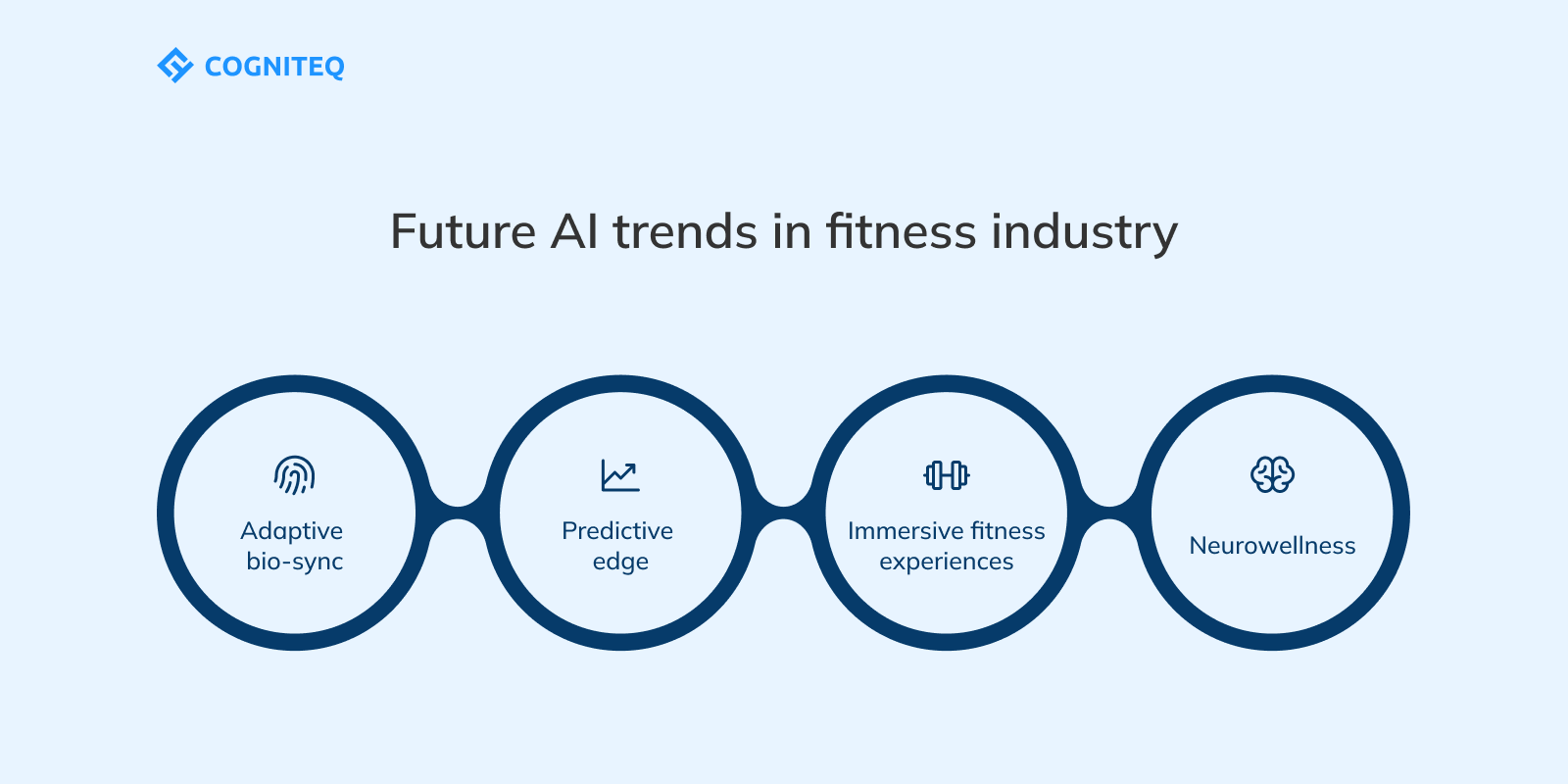
- Adaptive bio-sync
Real-time adaptive training is one of the most significant updates. Modern AI fitness systems can ingest a constant stream of biometric data (Heart Rate Variability (HRV), sleep quality, metabolic markers, etc). Thanks to this, they can adjust your workout directly while you are doing it.
- Predictive edge
It is expected that the popularity of predictive analytics will grow. AI in health and fitness uses recurrent neural networks (RNNs) to analyze months of your biometric history. Such tools can forecast potential injury risks and overtraining markers weeks in advance.
- Immersive fitness experiences
Lightweight AR glasses can transform a boring morning jog into an exciting escape from a digital dragon, while a HIIT session can become a rhythm-based game. In such solutions, AI helps adapt the scenario to your actual speed and physical effort. For example, if your heart rate drops, the AI-generated environment might increase the “threat level” to keep you in your target zone.
- Neurowellness
Apart from this, AI in fitness industry is now focusing on neurowellness. Modern systems monitor your nervous system (through devices like AI-powered Vagus Nerve Stimulators or EEG headsets) to ensure that you are mentally resilient.
Wrapping up
Thanks to AI, the “no pain, no gain” approach to fitness is becoming a thing of the past. Artificial intelligence in fitness helps create workout and nutrition strategies tailored to individual needs and physiological capabilities. As a result, the training process becomes more mindful and effective. These advancements make fitness accessible to a wider range of users, which explains the growing popularity of such solutions.
If you are planning to launch your own AI-powered fitness app, contact us. Our team with 15 years of industry experience is ready to help you succeed.
FAQ
What is AI in fitness?
It involves the integration of AI technologies (machine learning, computer vision, and predictive modeling) into fitness software to automate and enhance health management. As a result, software tools become digital assistants that process vast biometric data from wearables. Agentic AI can reason through users’ recovery metrics to provide real-time coaching, form correction via camera sensors, and automated nutritional planning.
What role does AI play in the fitness industry?
AI-first platforms analyze trends to predict users’ needs. The implementation of artificial intelligence has significantly lowered the cost of high-tier coaching and made personalized wellness experiences accessible to the masses. It has also bridged the gap between physical gyms and home workouts. It is possible thanks to the introduction of connected ecosystems that sync users’ gym performance directly with their home-based recovery apps.
What are the main benefits of using AI in the fitness industry?
AI helps eliminate guesswork. It provides safety through real-time form correction, which is important for reducing injury risks for solo trainers. For users, AI ensures faster results through adjusting workouts based on daily recovery scores. Apart from this, AI-powered software can predict when a user is likely to quit and intervene with personalized incentives. As a result, gym owners can benefit from massive scalability and higher retention rates.
Why is AI important in modern fitness apps?
Users are already accustomed to digital experiences that adapt to their lives. Static workout plans are obsolete. AI is capable of analyzing the massive amounts of data collected by 24/7 wearables into actionable advice. It provides the precision needed to keep users engaged and transforms fitness solutions into active partners in a user's physical activities.
Can AI in fitness apps ensure enhanced workout personalization?
Yes, it is one of the key goals of AI implementation. AI algorithms can analyze users’ sleep quality, heart rate variability, and other factors to adjust workout intensity. If the AI detects that a user is under-recovered, it might automatically swap a high-intensity session for mobility work. Thanks to this, the workout is always aligned with the user’s physiological state and can ensure both safety and progress.


